
Am I Too Young for a Hair Transplant? The Risks of Starting Too Early
14th January 2026
Am I Too Young for a Hair Transplant? The Risks of Starting Too Early
If you are in your early 20s and noticing a receding hairline, it is normal to feel panicked. Your hair is a huge part of your identity. When you see it thinning, the instinct is often to “fix it” immediately.
At the Farjo Hair Institute, we see many young men who are eager to book surgery as soon as possible. However, we often have to give them advice they don’t expect: Wait.
While modern hair transplants are incredible procedures, timing is everything. Operating too early can actually cause long-term problems.
Here is why your age matters, the risks of rushing in and the “stabilisation” plan you should follow instead.
The “Moving Goalposts” of Hair Loss
Male Pattern Baldness (Androgenetic Alopecia) is a progressive condition. It doesn’t stop just because you have had a transplant.
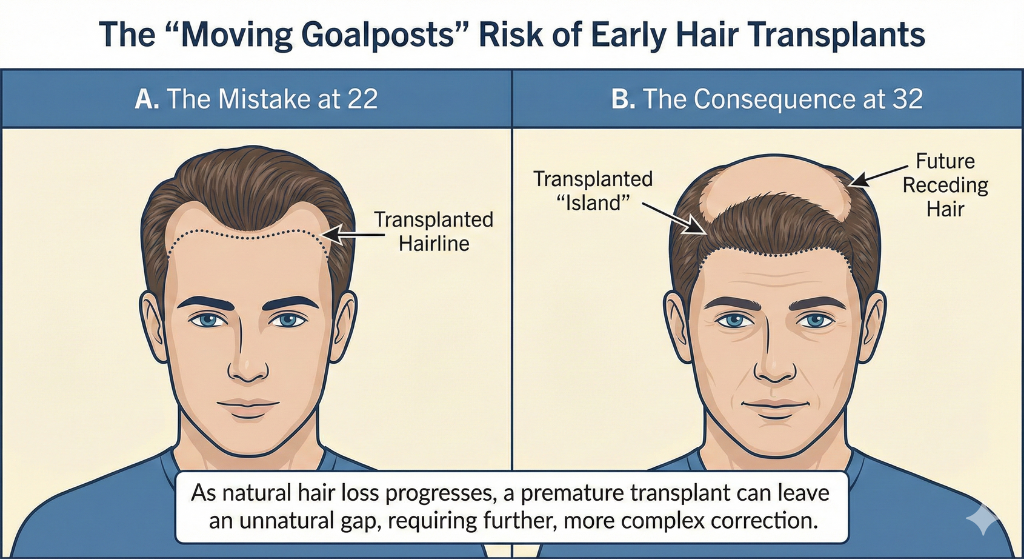
If you are 21 years old and have a receding hairline, your hair loss pattern is just getting started. It hasn’t “declared” itself yet. We don’t know if you will only lose a bit of temple hair, or if you are destined to have excessive hair loss.
And herein lies the problem – imagine you fill in your hairline at age 22. You look great for two years. But by age 26, your natural hair continues to recede behind the transplanted area. You could be left with a permanent “island” of transplanted hair at the front and a widening gap of bald skin behind it. This looks unnatural and is often harder to fix than the original hair loss. Dr Bessam Farjo speaks more about this in a BBC article HERE.
Don’t Waste Your “Donor Bank”
You have a limited number of hair follicles on the back and sides of your head (your donor area). Once we move them, they don’t grow back in the original spot.
If we use 2,500 grafts to lower a hairline for a 22-year-old, we have “spent” a large portion of that bank. If that patient goes on to lose their crown hair in their 30s, we might not have enough donor hair left to cover the new bald spots.
Our surgeons have long advocated for this conservative approach with young patients. Our goal isn’t just to make you look good today, but to ensure you still look natural at 30, 40, 50 and beyond.
The Magic Number: Is There a “Best Age”?
While every patient is unique, most responsible surgeons are very cautious about operating on anyone under the age of 25. By your mid-to-late 20s (and certainly your 30s), your hair loss pattern becomes more predictable. This allows us to design a hairline that will age gracefully with you.
Your Action Plan: Stabilise First, Restore Later
If surgery is off the table for now, does that mean you have to just watch your hair fall out? Absolutely not.
If you are young and losing hair, your priority is stabilisation. You need to stop the progression and save the hair you have. This is often achieved through non-surgical treatments.
1. Medication (Finasteride, Dutasteride & Minoxidil)
These are the gold standards for hair retention.
- Finasteride helps block DHT, the hormone responsible for shrinking hair follicles. Dutasteride is a stronger version of the drug.
- Minoxidil increases blood flow to the scalp, encouraging growth and thickness.
- Note: Always consult with a doctor before starting these treatments to understand potential side effects.
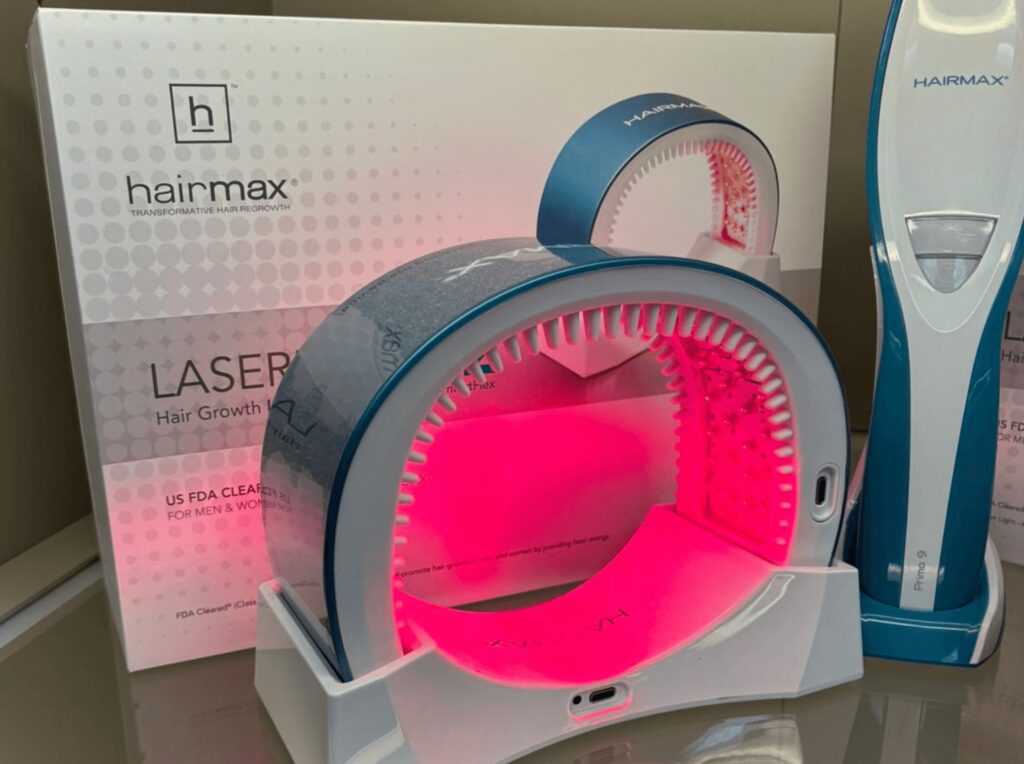
2. Low-Level Laser Therapy (LLLT)
We often recommend LLLT as a non-invasive option to stimulate cell activity in the follicles and improve hair quality.
3. Regenerative Treatments
Newer options, such as TricoPat, can also help maintain existing density without surgery. PRP is also a very popular procedure at our clinic. By taking a small sample of a patient’s blood (similar to when you donate blood) we consequently spin it in a centrifuge. This allows separation of the platelets (type of blood cells) from the rest of the plasma to settle in concentrated form in the sample. This platelet-rich plasma is then injected into the patient’s scalp amongst the thinning hair to benefit hair growth.
Summary: The Long Game
We know it is frustrating to be told to wait. But the best hair transplant is one that nobody notices – not just next year, but for the rest of your life.
If you are under 25, come and see us for a Consultation. Let’s build a plan to stabilise your loss now, so you are the perfect candidate for a transplant when the time is right.
Are you worried about early hair loss? Don’t guess your future. Book a consultation with our expert team in Manchester or London today to get an honest, long-term plan for your hair.