
Corrective Hair Transplants: Can a Botched Hair Transplant be Fixed?
30th March 2026
Hair transplants have never been more popular. However, with the global explosion of unregulated “hair mills” offering cut-price procedures (both abroad and increasingly within the UK) the industry has a growing dark side when it comes to botched hair transplant.
Every month at the Farjo Hair Institute, our surgeons consult with patients who have been left devastated by poorly executed surgeries. From unnatural, “pluggy” hairlines to severe scarring at the back of the head, a bad hair transplant is incredibly distressing.
But can a botched hair transplant surgery actually be fixed? We sat down with Farjo Hair Transplant Surgeon, Dr Rachael Kay, to explain the complex reality of corrective hair restoration.
The Reality of a ‘Botched’ Hair Transplant
When a surgery goes wrong, it usually falls into one of two categories:
- The Hairline: The new hair has been implanted at the wrong angle, the hairline is unnaturally straight, or the density is painfully thin.
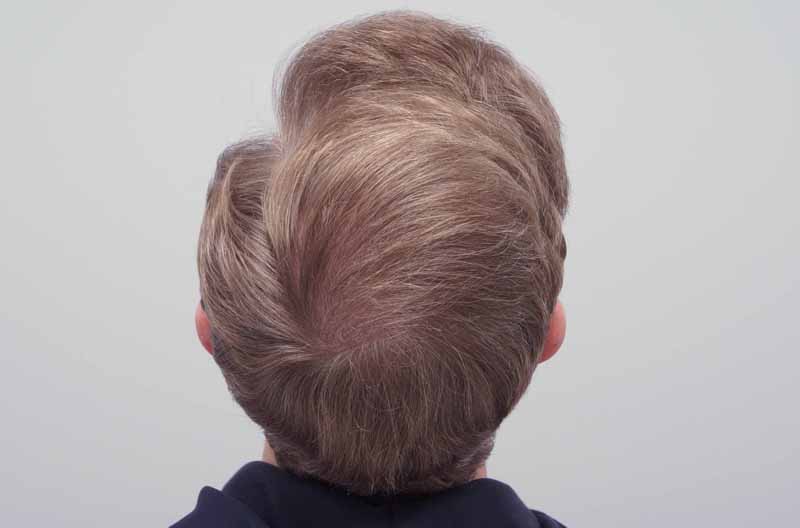
- The Donor Area (Over-Harvesting): In a rush to extract as many grafts as possible, an inexperienced technician has taken too much hair from the back and sides of the head. This leaves the patient with permanent, patchy bald spots – a condition known as “over-harvesting.”
“The psychological impact of a poorly executed transplant is often far worse than the original hair loss,” says Dr Rachael Kay. “Patients come to us feeling incredibly vulnerable, anxious and regretful. Our very first job is to listen, validate their concerns and then provide a completely honest, medical assessment of what can actually be salvaged.”
Assessing the Damage: Can It Be Repaired?
Repairing a bad transplant is significantly more complex than performing a first-time surgery. The success of a corrective procedure may depend on one crucial factor: your remaining donor hair.
“One of the biggest tragedies of an unregulated ‘hair mill’ surgery is over-harvesting,” Dr Kay explains. “You only have a finite number of donor hairs to last your entire lifetime. If a previous clinic has recklessly extracted too many grafts, your ‘bank’ is depleted. In these complex cases, we have to be incredibly strategic with the few viable hairs that are left, using them to camouflage the damage and soften an unnatural hairline.”
The Farjo Approach to Corrective Surgery
Because every botched transplant is unique, there is no one-size-fits-all fix. Depending on the severity of the previous surgery, Dr Kay and the Farjo team may employ several advanced techniques:
- Graft Removal and Recycling: If an old hairline is too low or looks unnatural, we can, in some cases, carefully extract the misplaced follicles and re-implant them in the correct direction or position.
- Camouflage Grafting: We can extract healthy follicles from the remaining donor area and place them strategically in front of a harsh, “pluggy” hairline to soften the appearance and create a natural, feathered transition.
- Scalp MicroPigmentation (SMP): If the donor area has been severely over-harvested and no more hair can be safely extracted, we can use medical-grade SMP (cosmetic tattooing) to conceal the scarring and create the illusion of density at the back of the scalp.
Getting It Right the Second Time
A corrective hair transplant requires elite surgical artistry, precision, and an intricate understanding of scalp tissue. It is not a procedure to be rushed or discounted.
As a leading hair transplant clinic in the UK holding a CQC “Outstanding” rating, the Farjo Hair Institute is a globally recognised centre of excellence for complex surgical repairs.
If you are unhappy with the results of a previous procedure, you do not have to suffer in silence.
Book a Confidential Repair Consultation with us today by filling out our form HERE.